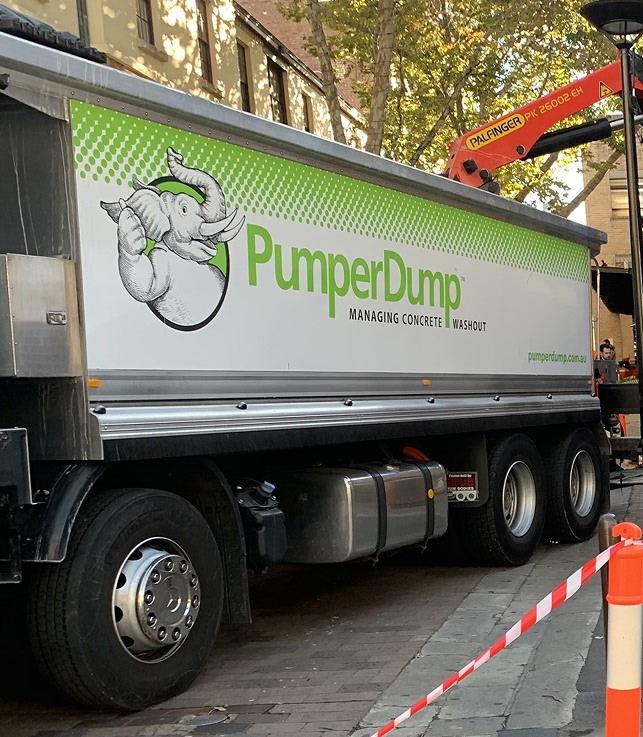

Hello again. As mentioned in our introductory post, over the years we have received feedback from various builders about their challenges. As a growing company with a specialised service, we have used this feedback to guide our growth, better serve the construction industry, and help solve problems while making processes more sustainable.
Lessons Learned
Here are some key insights:
The Cost of Waste
The most common problem builders face is the increasing cost of waste.
• Large sites can use multiple skip bins to separate waste streams, increasing recycling and reducing landfill.
• Builders on confined sites face logistical challenges and must reduce waste production.
Some skip bin companies struggle with wet concrete being tipped into skips. Once dried, it sticks inside the skip, making separation for recycling difficult and sending more concrete to landfill.
Washout Water Management
After a concrete pump is washed, uncontained washout water can lead to:
• Council fines
• Extra labour and time to clean the mess
• Budget blowouts due to hidden costs
Builders are increasingly calculating hidden costs such as crane or manitou time for delivering and emptying the washout tray, plus waste disposal costs and storage space for trays.
Sustainability and Plastic Waste
Sustainability is becoming more important, encompassing social, environmental, and economic factors. Forward-thinking builders may look for new systems to improve sustainability practices.
Plastic waste is a growing concern:
• Plastic contamination in concrete hinders recycling
• Reducing plastic use can save money for recyclers and builders
• Companies focused on sustainability aim to minimise plastic in concrete operations
Residential Building Waste
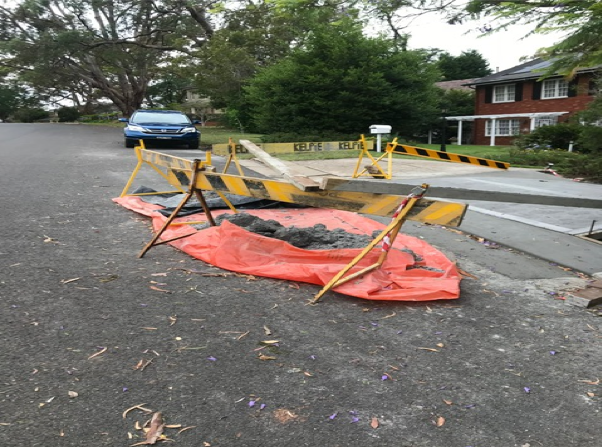
For example, some residential builders contain washout waste by lining the street with plastic. Common feedback includes:
• Hard labour needed to break up and remove concrete
• Time spent transporting waste to the tip, including tip fees
• Lost time that could be used more productively
EPA Fines and Personal Risk
Leaving waste on the road can lead to:
• Fines from regulatory bodies
• Safety hazards for drivers
• Environmental impact, as high-pH washout water can enter stormwater
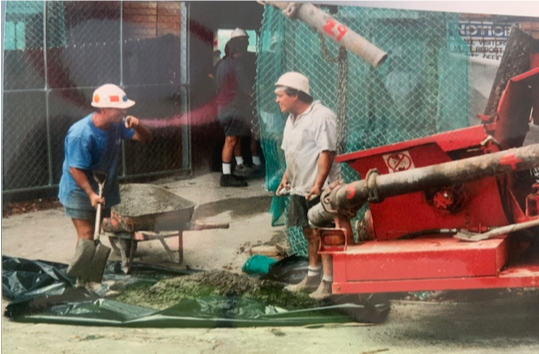
In some cases, no crane or manitou is used — just plastic, shovels, a wheelbarrow, and a pile of concrete. Risks include injury and inefficient use of labour.
Next post: The problem with plastic washout bags.
Want to know more? Get in touch.