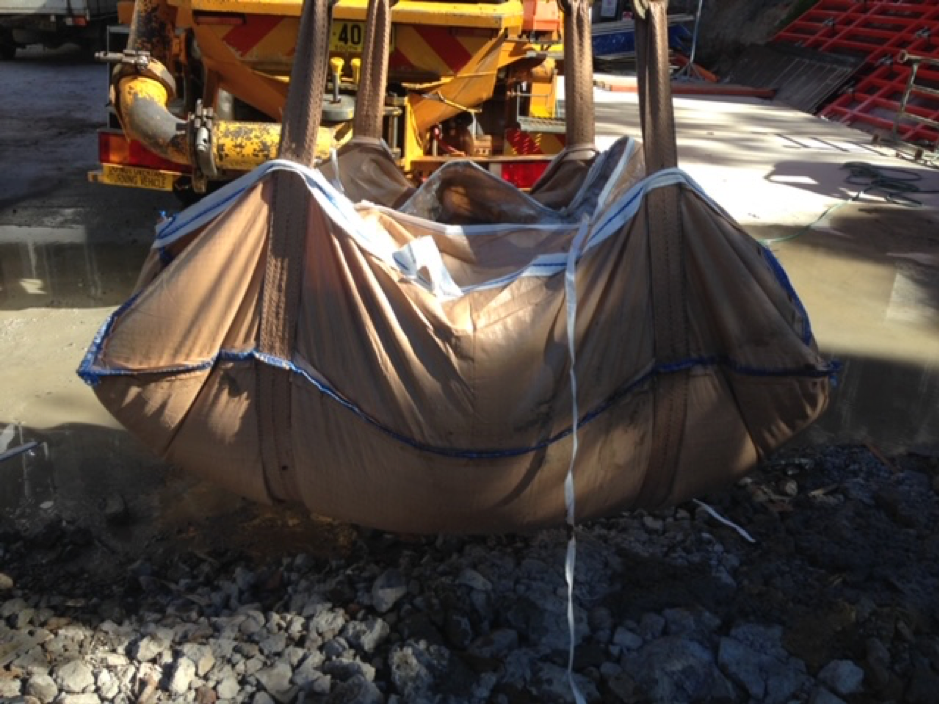

Concrete washout bags are easy to use and inexpensive, lined with an inner plastic bag to prevent leaching of washout water. They also have tie ropes to keep the bag upright while being filled.
How Washout Bags Are Used
Concrete pump operators keep them on their pumps for emergencies when builders haven’t organised a washout area. Each bag holds approximately 0.5 cubic metres. When full, a crane or forklift is needed to lift it, as it can weigh around a tonne or more.
We used to sell these bags about two years ago but stopped because of the amount of plastic reaching concrete recyclers, and our decision not to use plastic in operations.
Concrete recyclers also reported that:
• It is difficult to remove all the plastic from the concrete, contaminating recycled material
• The bag’s outer woven material can get caught in crushers, causing shutdowns
Problems for Builders
Issues arise when a pump requires more than 0.5m3 to wash out. Water can spill into the surrounding area, creating:
• Slip hazards as slurry dries
• Clean-up labour and time, especially on roadways
When a bag is picked up full and wet, slurry often pours out because the bag has no rigidity until the concrete cures.
These bags are usually dumped into onsite skips, which adds hidden costs: the skip quickly reaches its weight limit without utilising full volume. Builders aiming for a more sustainable future may avoid using these bags on site.
Enjoy the photos. The next post will cover concrete washout trays.
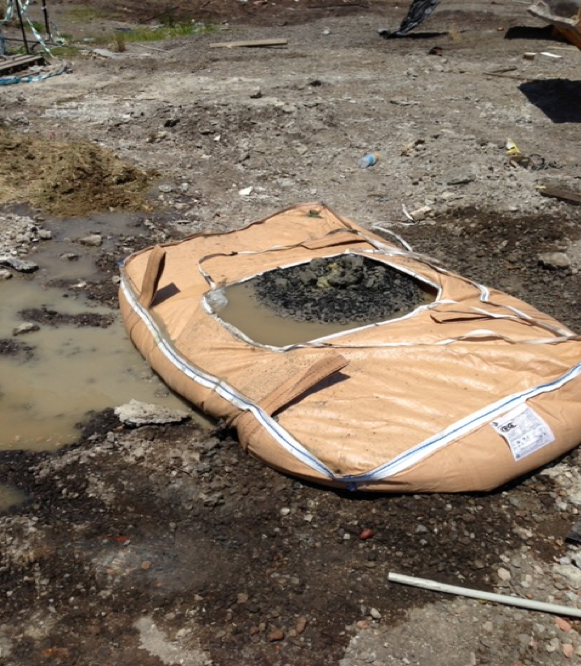
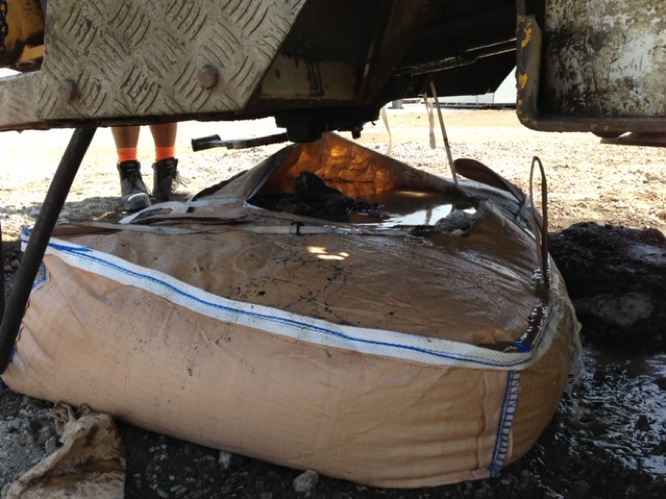
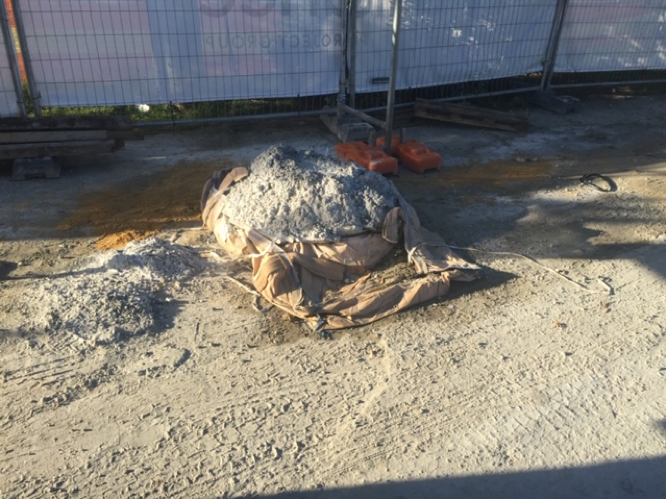
Future land fill; there is a better way: